




EXCLUSIVE FOOD SELECTION – INTERNATIONAL BRANDS – HORECA – RETAIL – SELECTED BRANDS –EXCLUSIVE FOOD SELECTION – INTERNATIONAL BRANDS – HORECA – RETAIL – SELECTED BRANDS –
Is filo pastry suitable for both sweet and savoury recipes?
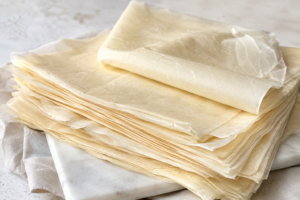
Yes. Filo pastry is very versatile and works very well in both sweet and savoury recipes because it has a neutral flavour. Its main characteristic is that it consists of very thin sheets which, when baked with a little butter or oil between the layers, become very crispy.
3 spectacular savoury ideas
- Greek spanakopita: A traditional pie filled with spinach, feta cheese, egg and dill. The crispy layers contrast beautifully with the moist, flavourful filling.
- Surprise parcels: Filled with goat’s cheese and caramelised onion, black pudding and apple, or prawns and vegetables. They’re perfect as individual appetisers.
- Savoury strudel: Roll up a filling of seasoned minced meat, chicken with mushrooms or roasted vegetables in several layers of filo pastry.
3 irresistible sweet ideas
- Turkish/Greek baklava: The king of filo pastry desserts. Layers of filo pastry filled with chopped pistachios or walnuts, baked and then drenched in a thick syrup of honey and orange blossom water.
- Quick apple strudel: Chopped apple with cinnamon, sugar and raisins, wrapped in filo pastry brushed with butter. It’s much lighter than the traditional puff pastry version.
- Crispy little cups: You can bake squares of filo pastry in muffin tins to create crispy ‘little baskets’. Once cooled, fill them with custard, cream or lemon curd and fresh fruit.
Whether you’re making sweet or savoury dishes, bear in mind that, as it’s so thin, it dries out and breaks within minutes on contact with the air. Whilst you’re working with one sheet, keep the others covered with a slightly damp tea towel so that they don’t lose their flexibility.
Is it better suited to sweet or savoury dishes?
It’s best suited to sweet dishes if you’re looking for:
- Textures that are impossible to replicate: Desserts such as baklava or nut nests can only be made with filo pastry. No other pastry (such as puff pastry or shortcrust pastry) can achieve that texture of ‘a thousand ultra-thin, crisp layers’ that melt in the mouth.
- Pairing with very dense fillings: As it is such a light and delicate pastry, it balances out heavy, sweet or cloying fillings (such as custard, nuts in honey or concentrated fruit compotes) beautifully.
It is more suitable for savoury dishes if you are looking for:
- A lighter alternative to puff pastry: Traditional puff pastry contains a great deal of butter worked into the dough. If you want to make a much lighter, crispier savoury pie, quiche or tart with less fat, filo pastry is the perfect alternative.
- Elegant and quick presentations: It’s ideal for making eye-catching appetisers in just a few minutes (little pouches, rolls or filled baskets) for dinner parties. They look very delicate and bake in the blink of an eye.
The practical verdict
- If you’re a beginner, it’s best to start with savoury options (such as little parcels of cheese and caramelised onion or a spinach tart). Savoury fillings are more forgiving if a layer of filo pastry tears slightly whilst you’re handling it.
- If you’re looking to impress with a high-end pastry, go for the sweet options. The crunch it adds to an apple strudel or some chocolate and banana parcels is simply unbeatable.