




What is the difference between feta cheese and other white cheeses?
The main difference between feta cheese and other white cheeses (such as fresh cheese, fresh mozzarella, or fresh goat cheese) lies in three key factors: its curing method, the type of milk used, and its final texture.
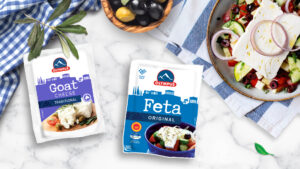
Comparison between feta cheese and other white cheeses
| Feature | Feta cheese (greek) | Fresh cheese (Latin or Spanish) | Fresh mozzarella (Italian) |
|---|---|---|---|
| Traditional Milk | Sheep (at least 70%) and Goat (up to 30%) | Cow or Goat | Buffalo (di bufala) or Cow (fiordilatte) |
| Process | Aged in brine (salted liquid) for at least 2 months | Unaged (consumed almost immediately after curdling) | Pasta filata (stretched and kneaded in hot water) |
| Dominant Flavor | Salty and tangy (due to brine) | Mild, milky, and slightly tangy | Mild, milky, and very fresh |
| Texture | Crumbly, breakable, and firm | Soft, moist, and grainy (easy to cut) | Elastic, chewy, and very moist |
Breakdown of key differences
Brine aging process (exclusive to feta)
The most crucial difference is that feta cheese is aged and preserved in brine (salted water).
-
Feta. After curdling and cutting into blocks, it is submerged in brine. This immersion gives it its characteristic intense, salty, and slightly tangy flavor, and its firm yet crumbly texture.
-
Fresh cheeses. They do not undergo significant aging or curing. They are consumed soft and full of moisture, resulting in a much milder, milkier flavor.
Type of milk and Protected Designation of Origin (PDO)
-
Feta. Authentic Greek Feta with PDO can only be made from sheep’s milk or a mixture of sheep and goat milk. This composition gives it a more complex, strong flavor that is less sweet than cow’s milk.
-
Other white cheeses. Usually made from cow’s milk (e.g., most fresh cheeses, fiordilatte mozzarella). Goat milk in fresh cheeses adds a slightly “earthy” note, but they lack the intense flavor of feta.
Texture and Culinary Use
-
Feta. A crumbly cheese that easily breaks into pieces. Perfect for sprinkling over salads (like Greek salad) or as a filling for savory pies.
-
Fresh mozzarella. A pasta filata cheese; elastic and melts beautifully. Mainly used in slices (Caprese salad) or for pizzas.
-
Fresh cheese (or panela). Very moist and soft, cuts cleanly and does not crumble as easily as feta. Used for grilling (panela cheese) or simply in slices.